


Published Apr 22, 2026 • 7 min
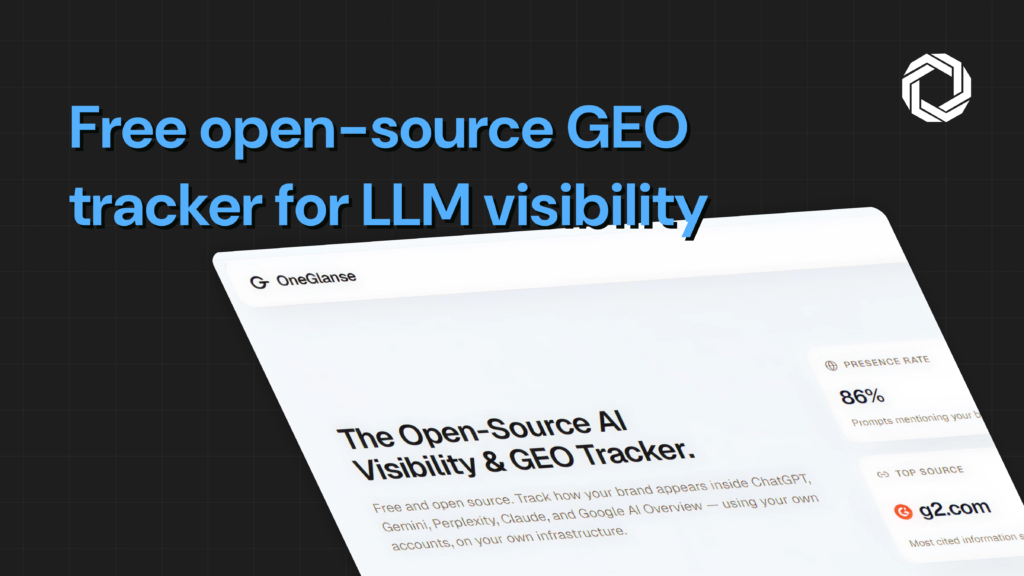
OneGlanse is a free, open-source GEO (Generative Engine Optimization) tracker. It monitors how your brand appears in AI-generated responses across five platforms: ChatGPT, Gemini, Perplexity, Claude, and Google AI Overview.
Unlike API-based monitoring tools that sample data or infer results, OneGlanse uses real UI outputs, the same answers a user actually sees when they type a query. That distinction matters more than it might seem. API outputs and UI outputs often diverge, particularly for tools like Google AI Overview where the rendered experience is what shapes user perception.
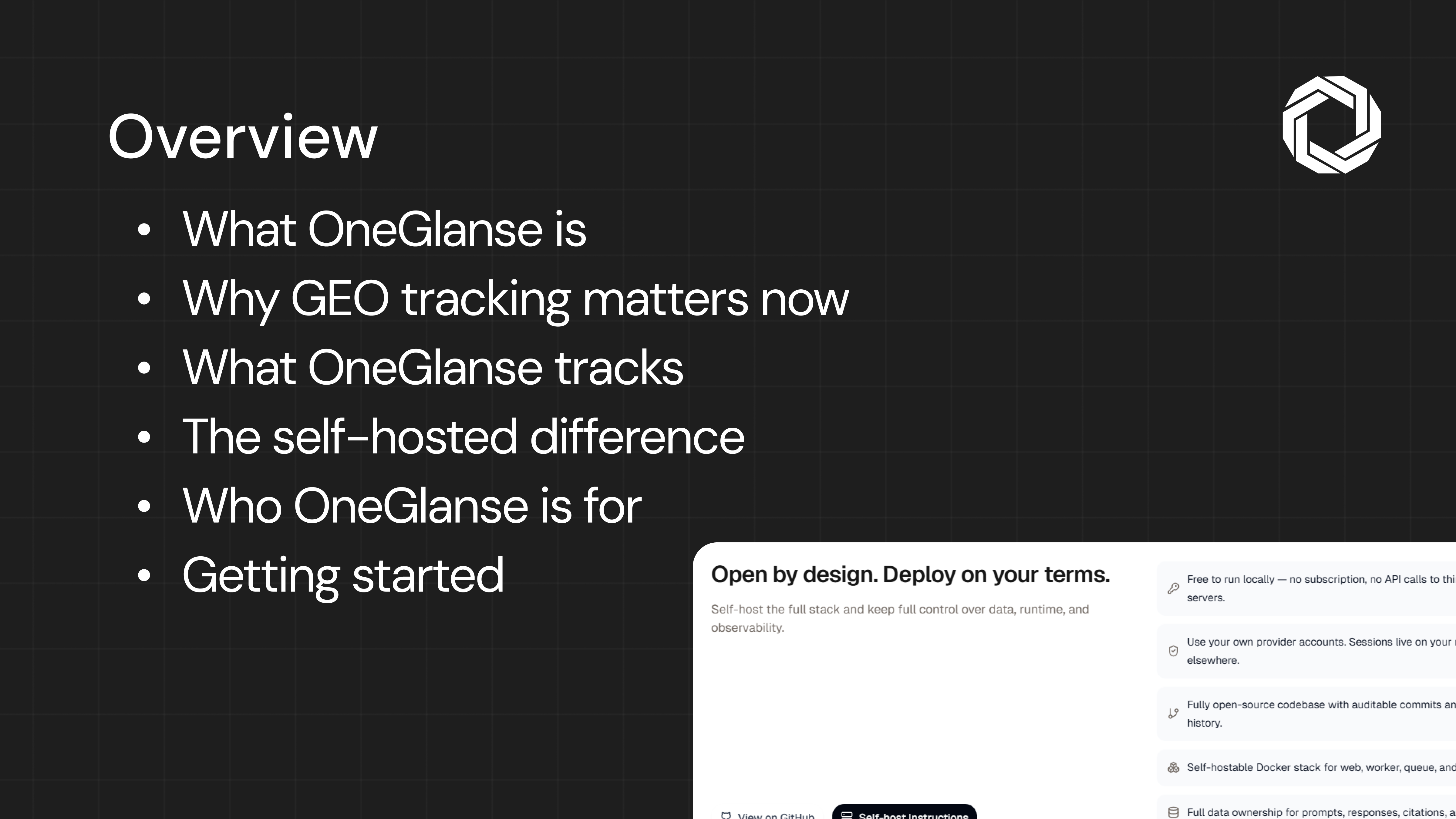
It is fully self-hosted. You run it locally or on your own infrastructure, which means your query data, your brand names, your competitor list, none of it touches a third-party server.
GEO as a discipline asks a different question than SEO. SEO asks: does this page rank for this keyword? GEO asks: does this brand appear when an AI answers a relevant question?
The difference is significant. A brand can rank well in traditional search while being completely absent from AI-generated answers. Conversely, a brand with modest organic search presence might appear frequently in AI responses if it is well-represented in the training data and cited sources those models draw from.
Right now, most organizations have no visibility into this second question. They are optimizing for a signal they can measure, organic rankings, while remaining blind to a signal that is increasingly shaping how users discover and evaluate products.
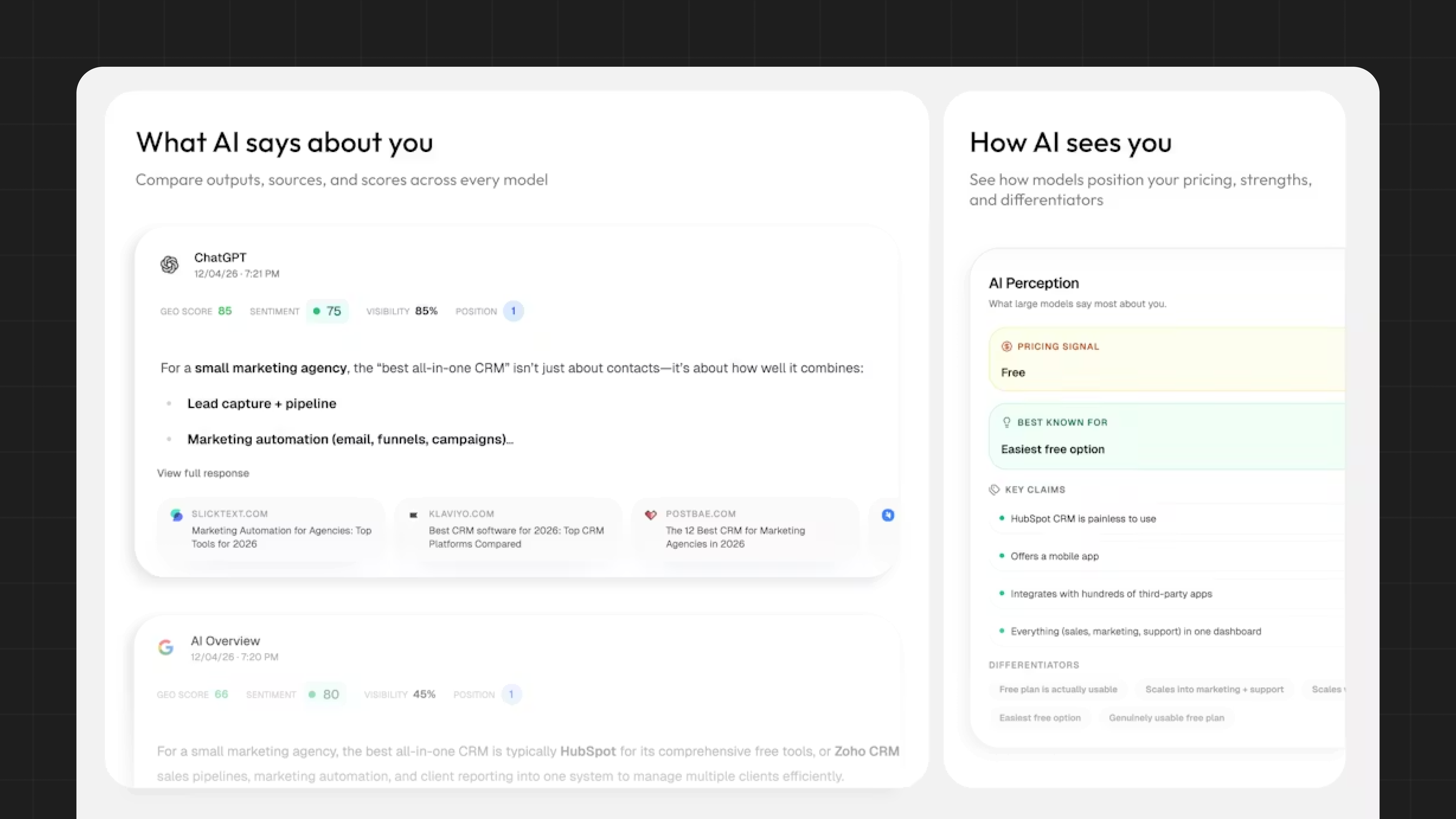
OneGlanse gives you structured visibility across several dimensions:
Brand mention tracking monitors whether and how your brand appears in AI responses to specific queries. You define the queries, these are typically the questions your prospective customers are likely to ask an AI assistant when looking for a solution like yours.
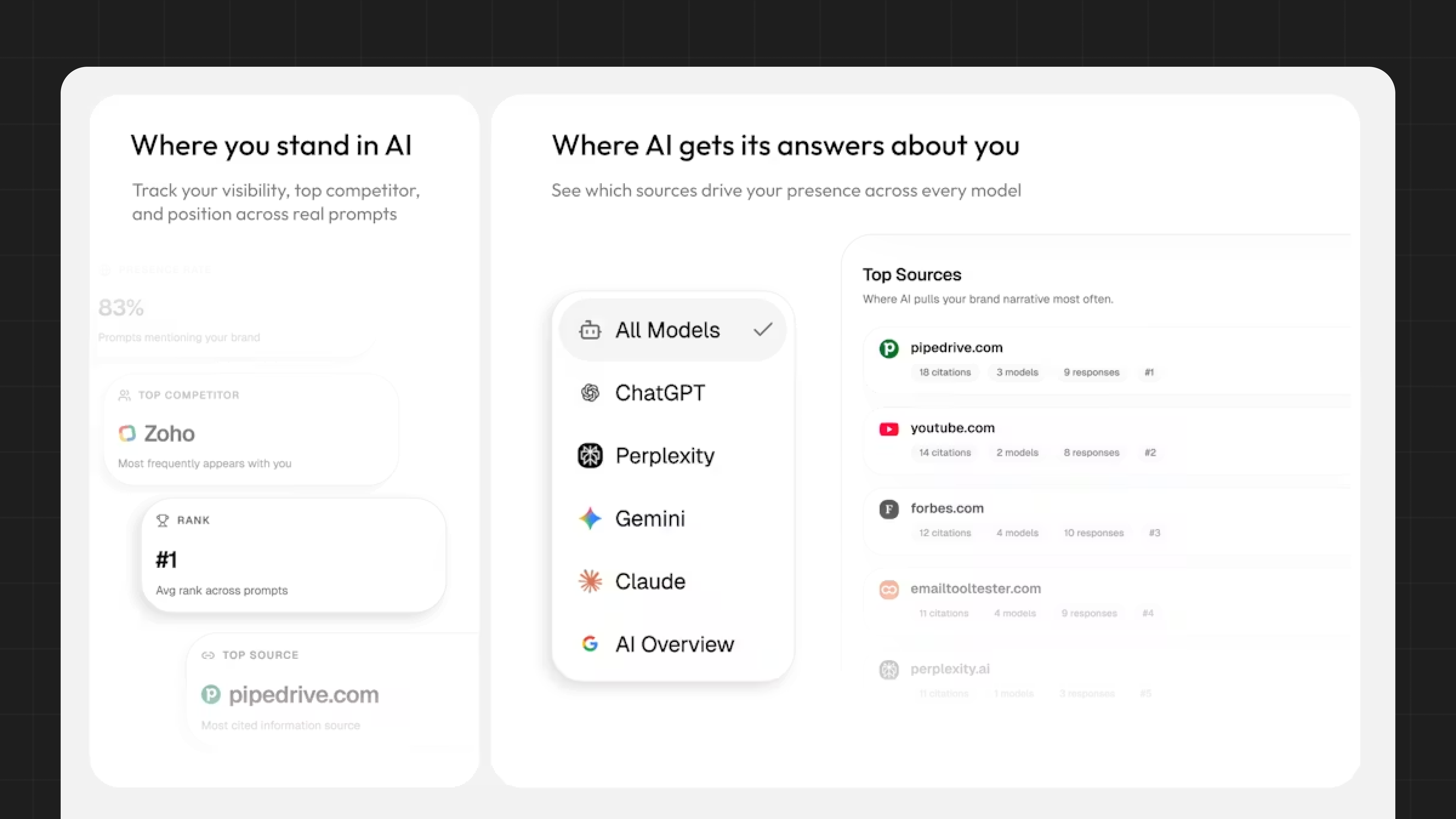
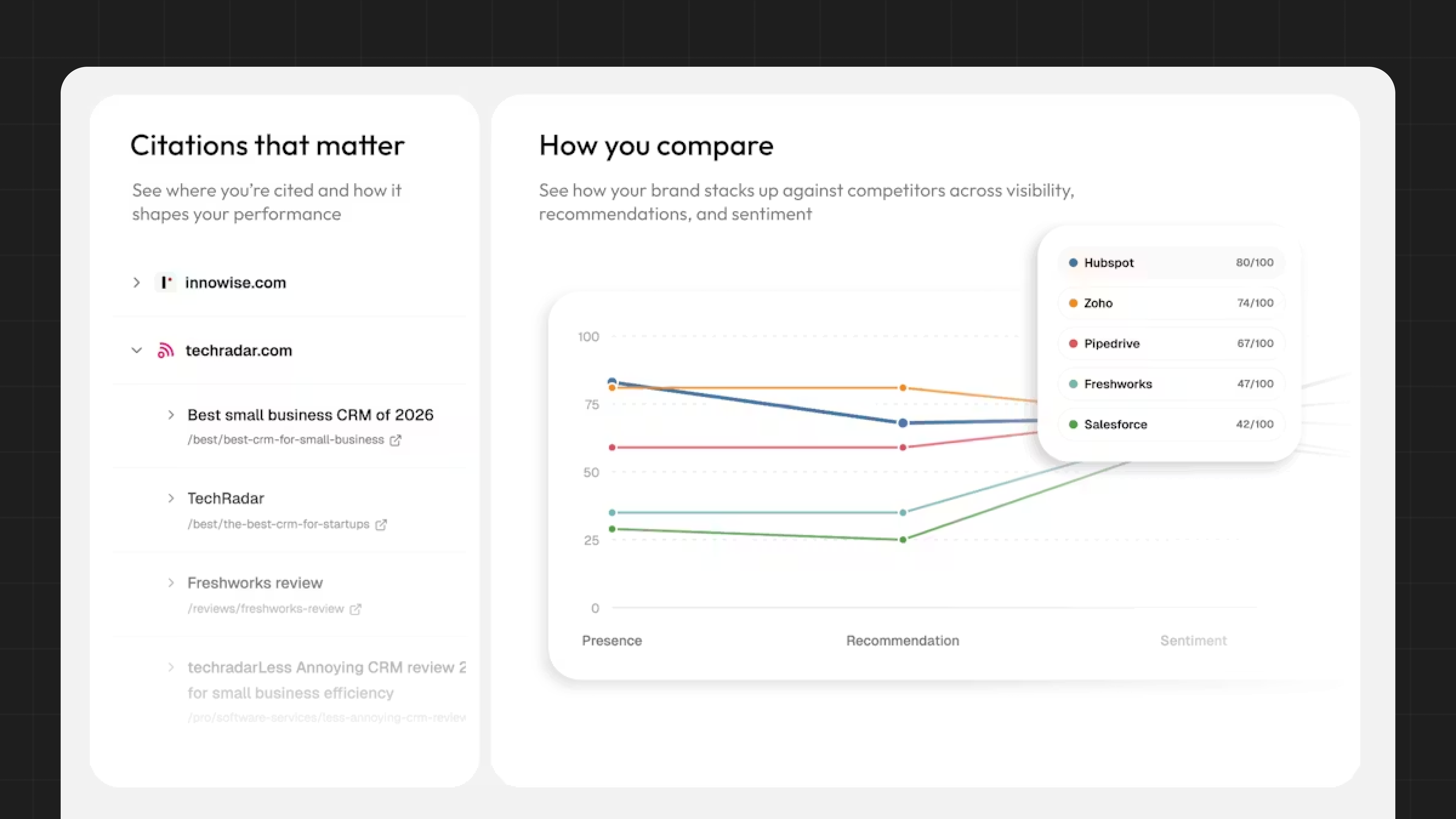
Competitor comparison lets you run the same queries and see how your brand’s presence stacks up against named competitors in the same AI response. This is particularly valuable for understanding category positioning, whether your brand appears alongside, above, or absent from the set of options an AI recommends.
Source analysis examines which sources AI models are citing when they discuss your product category. If the same three publications are consistently cited and you have no presence there, that is a clear content and PR signal.
Multi-platform coverage spans ChatGPT, Gemini, Perplexity, Claude, and Google AI Overview, the five platforms that collectively account for the majority of AI-assisted discovery queries today.
Most GEO monitoring products are SaaS tools with subscription pricing, usage-based billing, and a cloud backend that processes and stores your queries. That model creates three problems.
First, cost, query volumes that generate meaningful trend data can get expensive quickly. Second, opacity, proprietary scoring systems make it difficult to understand what you are actually measuring or why your score changed. Third, data exposure, your brand monitoring queries can reveal competitive intelligence about what products, categories, and positioning you are focused on.
OneGlanse addresses all three. It is free. The methodology is open and inspectable. And because it runs locally or on your own servers, your data stays yours.
OneGlanse is useful for any team with a stake in how their brand appears in AI-generated content, marketing, SEO, content strategy, product, and developer relations teams. It is particularly well-suited for:
Technical teams who want to run their own infrastructure and avoid vendor dependency for brand intelligence. Agencies managing GEO visibility for multiple clients, where SaaS per-seat pricing becomes prohibitive. Companies in competitive categories where AI recommendations directly influence purchase consideration. Early-stage teams building GEO awareness into their practice before the market becomes crowded with paid tooling.
OneGlanse is open source and can be run locally without any account creation or API keys. You bring your own list of queries, define your brand and any competitors you want to track, and it captures real UI outputs from each of the supported AI platforms.
Because it uses actual UI outputs rather than API calls, the setup requires a local browser environment, but the project documentation walks through the configuration in full. Once running, you can structure your monitoring around the queries most relevant to your category and review how AI responses shift over time as the underlying models update.
GEO is not a replacement for SEO. Organic search remains a high-volume, high-intent channel and will for the foreseeable future. But AI-generated responses are a distinct surface, with distinct mechanics, and they are becoming a primary discovery path for an increasing share of users, particularly in B2B software, professional services, and technical product categories.
OneGlanse is the first tool that makes it practical to monitor that surface without a paid subscription, without proprietary black-box scoring, and without sending your brand intelligence to a third party. For teams serious about understanding how AI sees their brand, it is a logical first step.
Link for getting started: https://oneglanse.com/