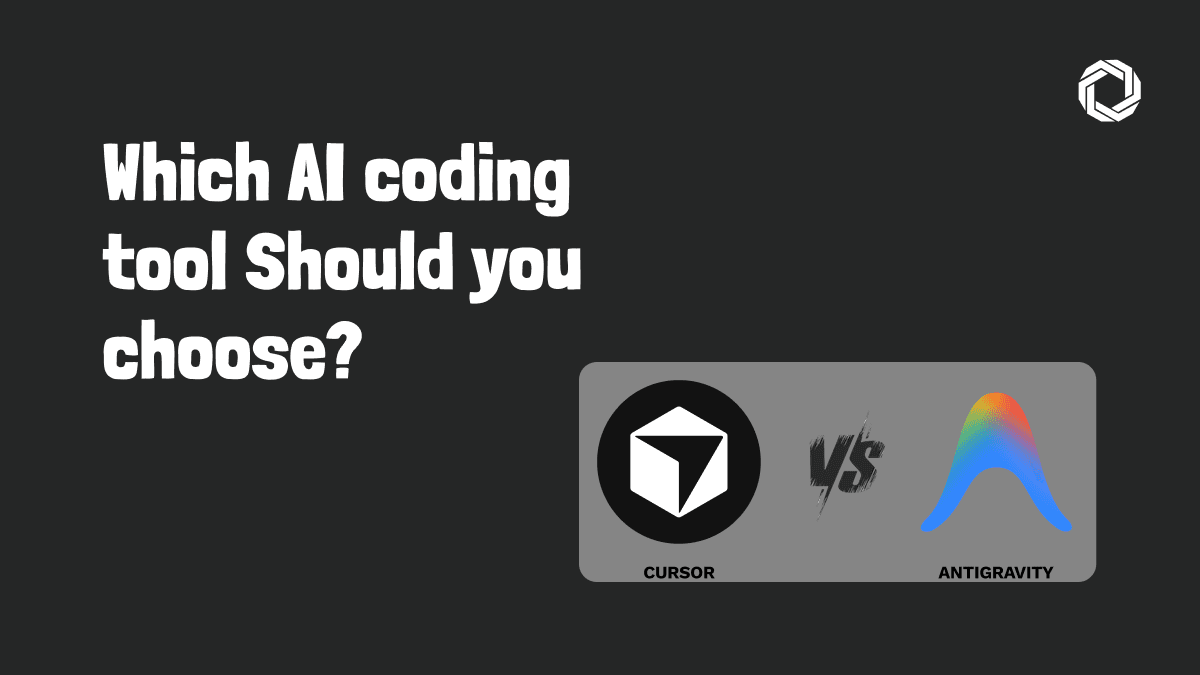
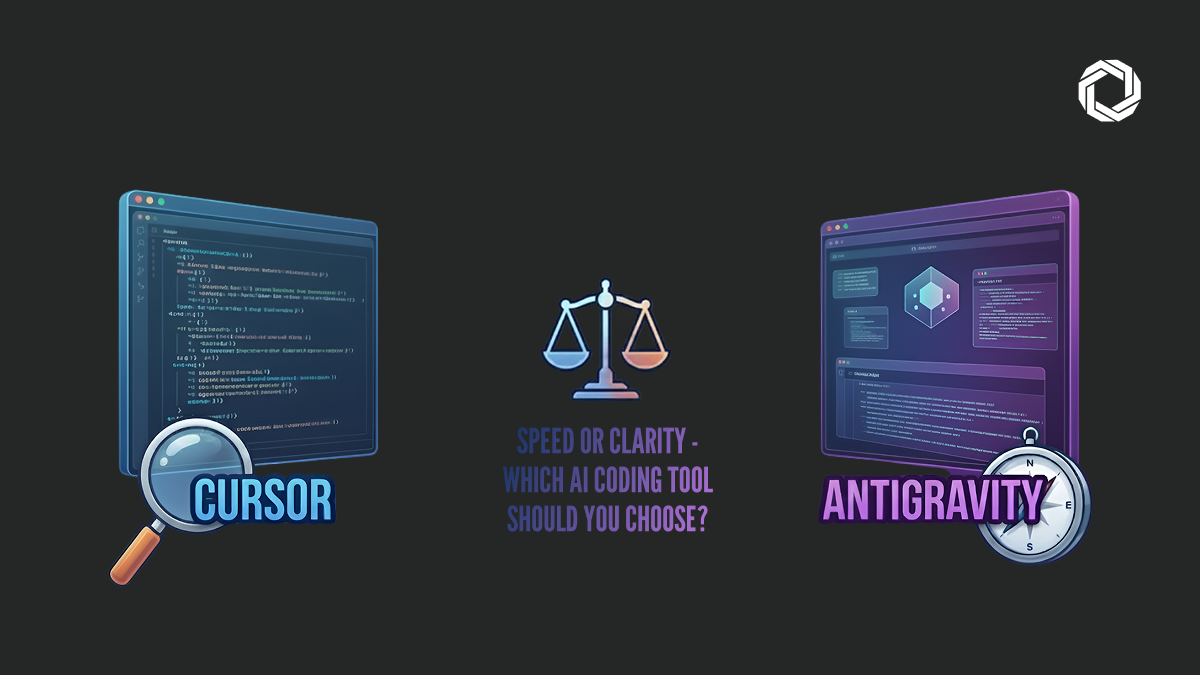
AI coding assistants have moved past the experimental stage. They are now a core part of how development teams ship software, and the choice of which tool to use is no longer trivial. Cursor and Antigravity have emerged as two of the most distinct options in the space, not because of feature lists, but because of philosophy. One is built to help you move faster. The other is built to help you think better. This post breaks down how each tool works, where each one creates risk if over-relied upon, and how to combine them into a workflow that gives you both speed and architectural clarity.
Cursor: Built for Fast Execution
 Cursor is an AI-first coding environment built as a smart layer over VS Code. It is designed for developers who need to move fast across large, complex codebases, not by editing file by file, but by issuing high-level commands the AI executes project-wide.
Refactor a component to hooks. Add authentication across all API routes. Fix TypeScript errors across the entire codebase. Cursor handles the implementation, automating the repetitive work that otherwise consumes engineering hours.
It scales well for large refactors, onboarding into unfamiliar projects, and UI-heavy or MVP workstreams. The risk is equally clear: over-rely on it and you get working code you do not fully understand, which compounds into architectural debt faster than manually written code ever would.
Antigravity: Built for Deep Thinking
Antigravity takes a fundamentally different approach. Rather than writing code for you, it acts as an AI pair programmer, a senior engineer on call who helps you understand what you are working with before you write a line.
It excels at explaining confusing legacy logic, surfacing the root cause of race conditions and tricky bugs, and walking through architectural trade-offs before a decision is locked in. It will not generate a file for you. It will make the reasoning behind that file significantly stronger.
For system design discussions, long-term maintainability decisions, and any workflow where understanding matters more than throughput, Antigravity is the better tool in the room.
The Core Loop Difference
The distinction is not just in features, it is in the feedback loop each tool creates.
Cursor's loop: Prompt → AI writes code → Result. Fast and efficient, but often opaque. You get working code quickly without necessarily understanding its implications.
Antigravity's loop: Question → AI explains → You write code → Result. Slower and more intentional. You stay in control, deepen your understanding, and grow as a developer with every iteration.
Neither loop is wrong. One prioritises speed. The other cultivates clarity. The failure mode comes from using only one.
The Smartest Developers Use Both
The most effective engineering teams do not choose between these tools, they sequence them deliberately:
Plan with Antigravity, think through design, identify edge cases, weigh architectural trade-offs before writing anything. Build with Cursor, generate structure, implement fast, handle the boilerplate. Review with Antigravity, validate logic, spot anti-patterns, improve code quality before it ships.
The result is a compound loop: deep thinking leads to fast execution leads to better thinking. Each cycle makes the next one more efficient.
Choose Based on Your Current Imbalance
If you are stuck overthinking and not shipping, Cursor builds momentum. If you are shipping on autopilot without understanding what you are building, Antigravity forces the clarity you are skipping.
The most powerful tool is not the most feature-rich one. It is the one that corrects whatever is currently slowing you down or making your output fragile.